
Getting a drill to a roadless site is the part everyone talks about. Keeping it supplied once it's there is the part that actually decides whether a remote program runs smoothly or bleeds days. This is the resupply side of a fly-in drill program, written from how these jobs really run.
The move is the start, not the end
When people picture flying a drill program, they picture the move — the rig broken into sling loads and placed on a bare pad. That's real, but it's day one. The day the drill starts turning, a second, quieter job begins and doesn't stop until the program does: keeping the site supplied.
A move day is a day with no meters. Resupply is the opposite — it's the flying that keeps the meters coming. Fuel, water gear, food, parts and people cycle in and out on a schedule for the whole length of the program. Plan only for the move and you've planned for one day of a job that runs for weeks.
Water comes first — sometimes before the first meter
Water runs the hole. It cools the bit and lifts the cuttings back up, and without it the drill doesn't drill. On a site with a creek or a lake nearby that's a pump and a line. On a dry ridge it's a real piece of logistics: pumps and a long water line flown in and set up before a single meter gets drilled.
That makes water the first thing in and a constant after that. If the water source is marginal or the line is long, resupply has to account for it the same way it accounts for fuel — it's not a one-time setup, it's part of keeping the hole alive.
Fuel moves in drums and gets cached
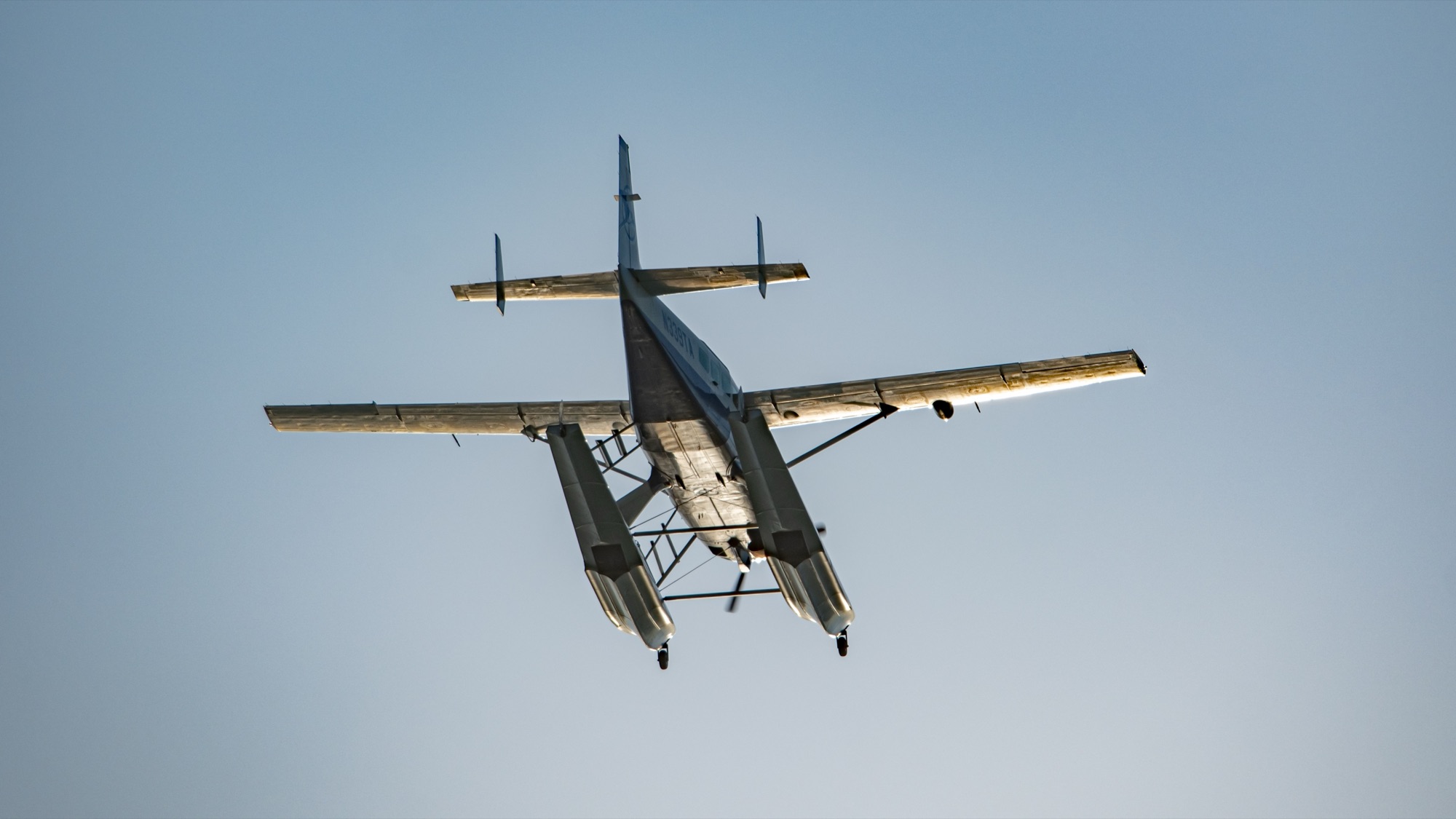
Fuel goes in by sling load under a helicopter or in a floatplane, and gets cached on site to be drawn down over the program. The drill burns it, and in cold weather so does the camp — a Herman Nelson heater keeps gear and people working, and it needs feeding too.
Because fuel is heavy and continuous, it's usually the single biggest driver of how often an aircraft has to come back. Getting the cache sized right against the program length is the difference between a steady cycle and a scramble.
Crews rotate on a cycle
People are resupply too. Drillers and helpers work rotations, so there's a steady in-and-out of crew for the length of the program — and the aircraft that fits depends on how many move at once.
Three drills running is about nine drillers and helpers plus a foreman — call it ten, a single Caravan trip, not a big job. It's the larger camps and the fifteen-to-twenty-plus rotations that move up into a Twin Otter or a regional turboprop, and those need a real prepared strip, not just a clearing. Count every body when you plan it: one person over a seat count turns one flight into two.
And core flies back out
Resupply isn't one-way. As holes get finished, core boxes fly back out to the geologists — the whole reason the program exists. A return leg that would otherwise fly empty is often the cheapest way to move core, so it's worth building into the schedule rather than treating as an afterthought.
Bad ground changes the math
Here's where a tidy plan meets reality. When a drill hits broken or sandy rock it starts blocking — water stops flowing clean and a three-metre run turns into five or six. The hole slows, the program stretches, and a program that runs longer than planned needs more resupply runs than anyone budgeted.
That's not a reason to over-order on day one — it's a reason to keep the cycle flexible. The programs that stay on track are the ones whose resupply schedule had slack in it before the bad ground showed up.
Weather is the variable you plan around
A socked-in valley grounds the helicopter, and the resupply waits. You can't beat weather, but you can keep it from becoming a shutdown: a backup aircraft lined up, a fuel and water buffer on site, and a schedule that doesn't assume every flight goes on its day.
That's the real job of remote aviation logistics — not finding one perfect flight, but keeping a continuous lifeline running across the bad days as well as the good ones. Sourcing the aircraft fast, with the backup already known, is what keeps a weather day from costing two.